Territories and beat plans
Organise the outlet universe by territory, beat, visit frequency and representative so planned market coverage is clear before the working day begins.
Explore workflow
Frequent outlet visits, broad SKU catalogues, schemes and multi-tier distribution make execution consistency central to FMCG sales.
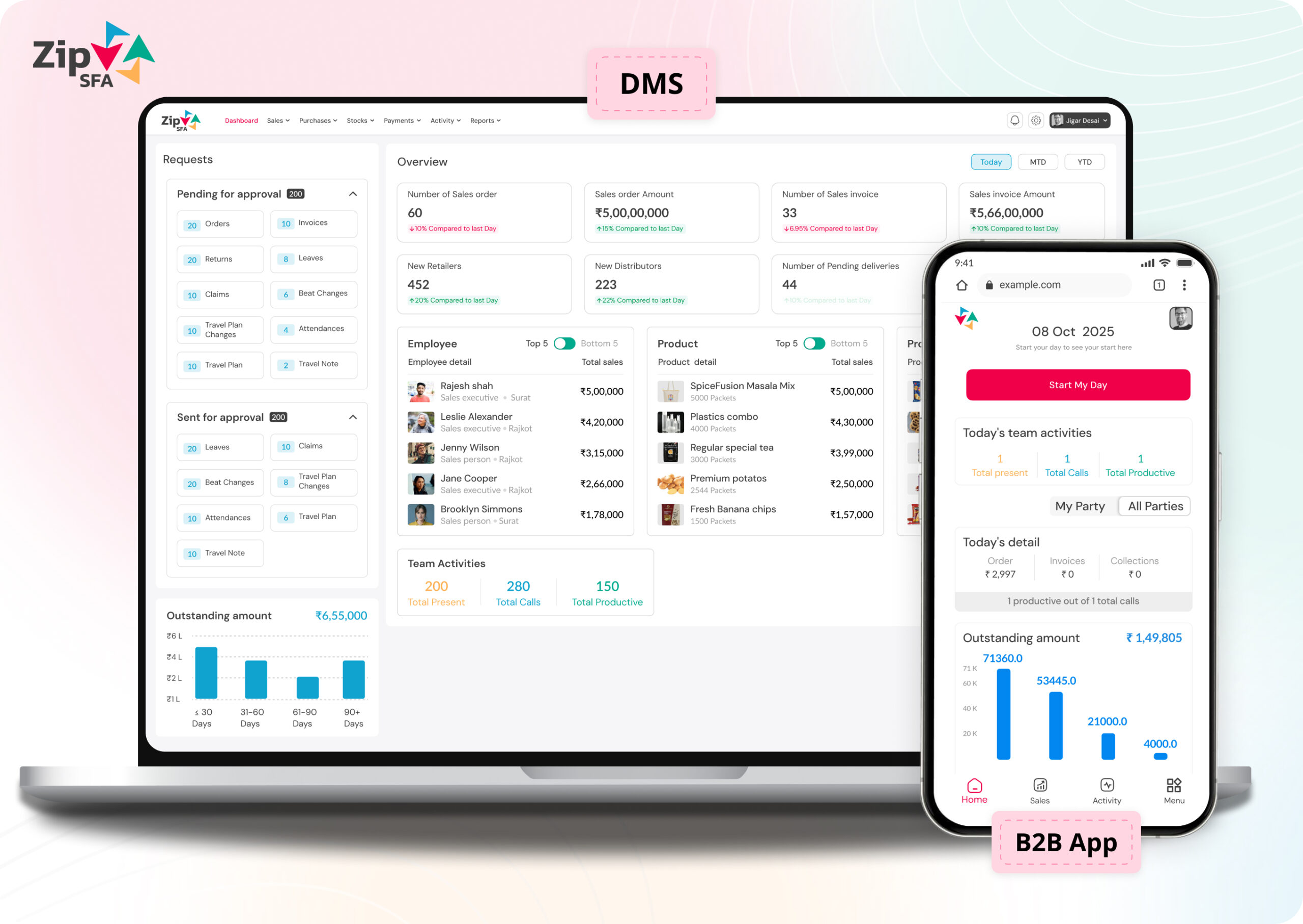
ZipSFA is configured around existing roles, customer structures, territories, approvals and reporting needs rather than assuming one standard implementation.
Beat and outlet coverage
Retail order capture
Distributor and secondary-sales visibility
Product and territory reporting
FMCG sales force automation should help representatives complete high-frequency outlet work while giving managers and distribution teams a consistent record of coverage, orders, products and follow-up.
Organise the outlet universe by territory, beat, visit frequency and representative so planned market coverage is clear before the working day begins.
Explore workflowGive field users the customer context and assigned activities needed to record each visit, its commercial outcome and the next action.
Explore workflowCapture customer, SKU, quantity and relevant commercial context during the visit instead of rebuilding orders from notes or messages.
Explore workflowConnect field demand with the configured distributor process, ownership, approvals and downstream transaction flow.
Explore workflowReview distributor-to-retailer movement by product, partner and territory when secondary transactions are captured or integrated.
Explore workflowEvaluate the activities representatives must continue when connectivity is inconsistent and how records synchronize after reconnection.
Explore workflowA useful demonstration should follow one representative day from the assigned beat through outlet activity, order capture, distributor ownership and manager review. Use representative masters and normal exceptions instead of a generic feature tour.
Permissions and workflows should match responsibility, so representatives stay focused while managers and operations teams retain the required control.
A fmcg implementation should reflect actual channel roles, visit cadence, product structure and exception handling. Industry terminology alone is not a configuration.
A product review should establish what users will do differently and what managers will be able to verify. Avoid relying only on dashboard appearance or a long feature checklist.
Map roles, masters and existing systems.
Define workflow, permissions and approvals.
Test realistic data and exception scenarios.
Train users and review early operating records.
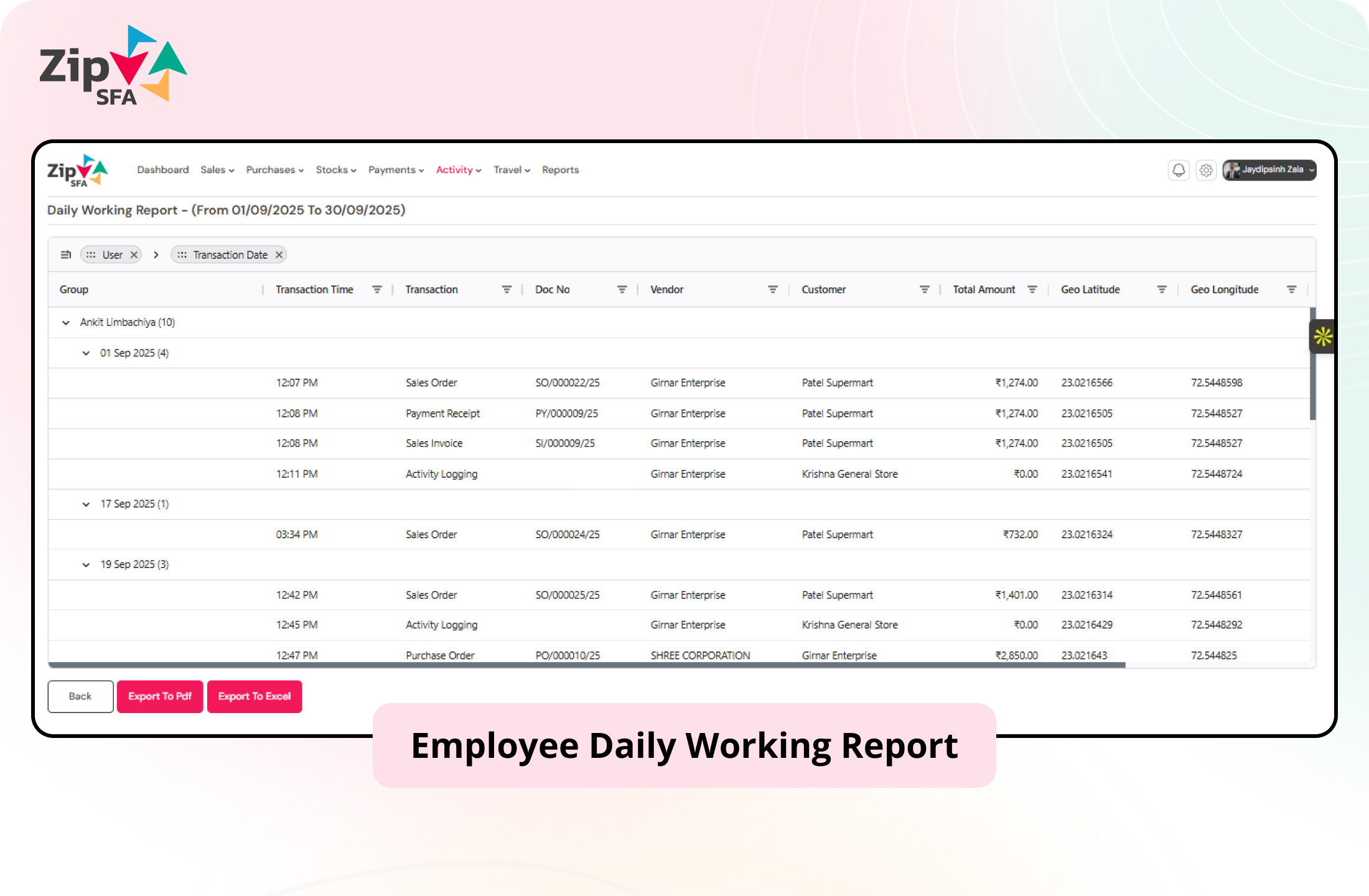
ZipSFA connects field and channel activity with the user, customer, date and relevant transaction. Managers can review the result and investigate the underlying execution without rebuilding it manually.
Use these answers to prepare a more specific product and process discussion.
FMCG sales force automation software structures recurring field activities such as beat planning, retailer visits, mobile order booking, product-level execution and manager reporting. The appropriate scope depends on the company's channel structure, distributor responsibilities and existing systems.
ZipSFA can be configured around territories, beats, outlet masters, visits, orders, attendance, expenses and management reporting. A discovery exercise should confirm which workflows, controls and reports each role requires.
Offline-capable activities can be evaluated for teams working in inconsistent network conditions. The implementation should define which data is prepared on the device, what can be captured offline and how records and exceptions synchronize later.
Distributor orders, transaction ownership and secondary-sales visibility can be reviewed as part of the implementation scope. Required masters, source systems, validation rules, timing and exception handling must be agreed before integration.
ERP integration can be evaluated when the external system exposes the required masters and transactions. The teams should define system ownership, transfer frequency, validation, failure handling and reconciliation responsibilities.
Prepare sample users and roles, territory and beat structures, representative outlet and product masters, common order scenarios, distributor responsibilities, required reports and the exceptions managers handle today.